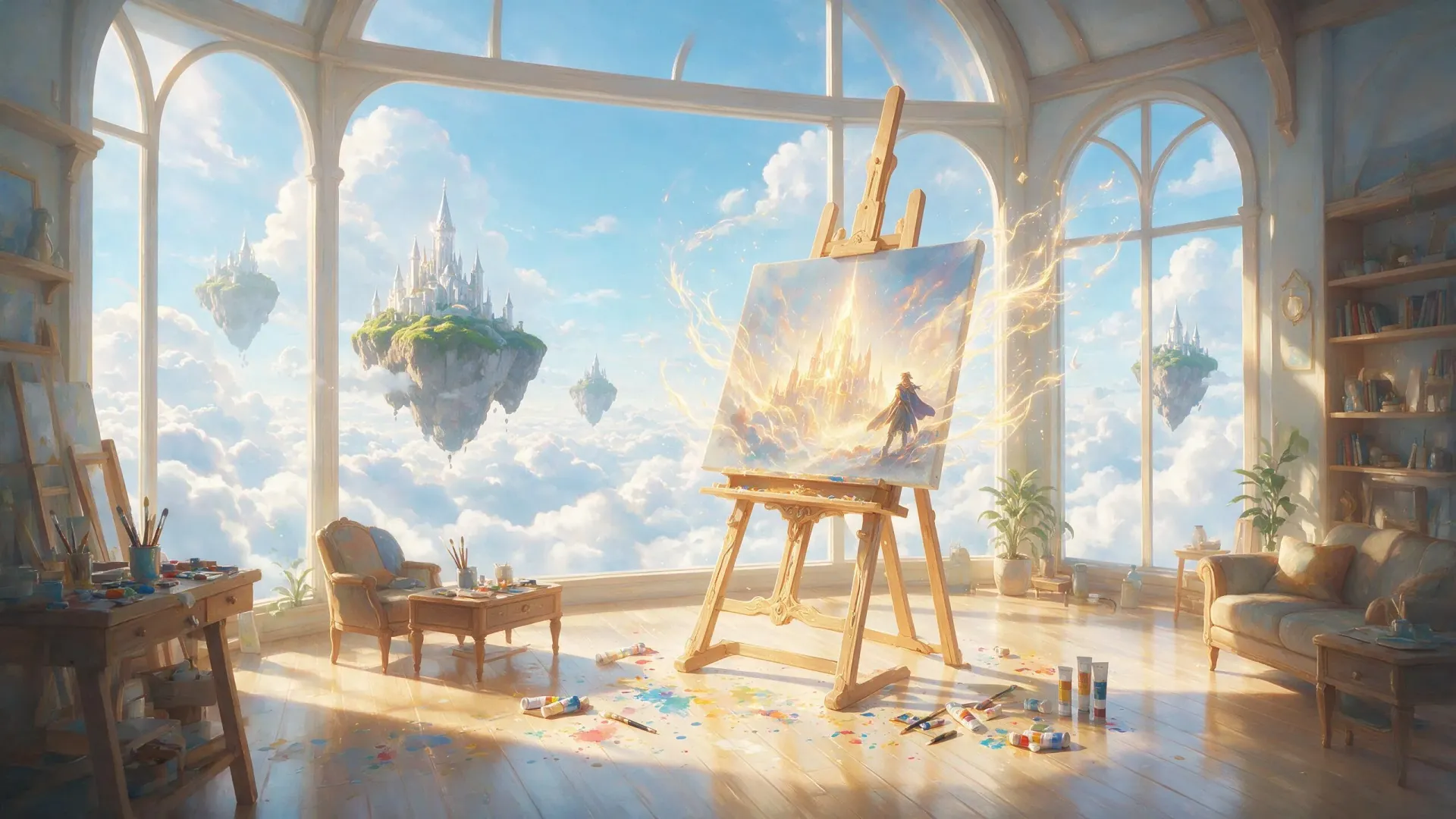
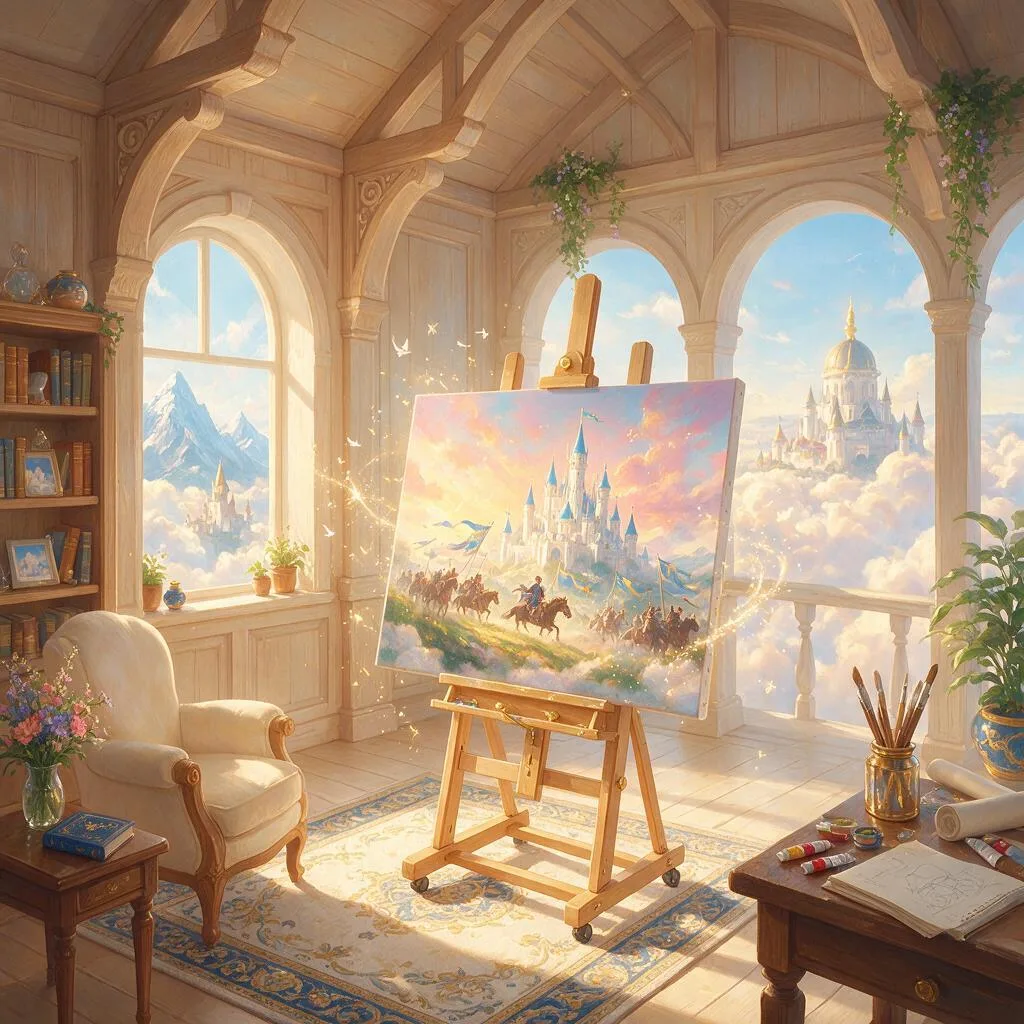
Turn a one-line brief into production-ready concept art: hero key art, character turnarounds, prop sheets, and environment vistas in a single locked style. Forge builds mood, palette, and silhouette language the way pre-production art directors do, so every frame reads like it came from the same visual bible. From first pitch board to a full asset suite, it keeps your world consistent shot after shot.
AI Concept Art Generator — Concept Art Forge
Concept Art Forge is an AI concept art generator that turns a one-line brief into production-ready pre-production art — hero key art, character turnarounds, prop sheets and environment vistas — all rendered in a single locked style. Describe the world once, and Forge holds the palette, mood and silhouette language across every sheet the way a pre-production art director would, so the whole set reads like it came from one visual bible. It is built for game and film teams that need a pitch pack fast, and because it runs as a session with memory, each new sheet builds on the direction you have already set.
A locked style across the whole concept art set
The hard part of concept art is not any single image — it is consistency. A pitch where the key art, the character and the environment each look like different projects reads as amateur no matter how strong the individual frames are. Forge builds mood, palette and silhouette language the way pre-production art directors do, then holds that direction across every piece, so a ruined sky-fortress vista, the knight who defends it and the daggers on the prop sheet all clearly live in the same world.
Set the style once and it stays locked. New sheets inherit the visual bible instead of re-rolling a fresh interpretation of your world with every prompt.
From one-line brief to a full asset suite
You do not need paragraph-long prompts. One line — "sunbaked desert scavenger, hero key art" — is a complete brief, and Forge covers the full pre-production spread from it: hero key art and cover pieces that set the tone, character turnarounds with front, three-quarter and back views on one consistent design, prop and weapon sheets with matching material and lighting logic, and environment vistas that share the world’s palette. From first pitch board to a full asset suite, the set grows without the style fracturing.
Iterate on-style in a session with memory
Forge runs as a continuous session, not a slot machine. Ask for "the back view," "a matching sidearm" or "the same fortress at dawn" and it builds on the previous render — same character design, same material logic, same palette — instead of starting over. The direction you have given carries forward through the session, which is what makes a real turnaround or a coherent prop sheet possible at all.
Built for pitch packs and pre-production speed
The output is aimed at real use: sheets you can drop into a pitch deck, hand to modelers or pin to the team’s reference board. For indie developers and small studios, that compresses the most expensive stretch of pre-production — the weeks between "we have an idea" and "we have a visual target" — into an afternoon of briefing and iterating, with full-resolution exports ready to share.
What you can create with Concept Art Forge
- Hero key art and cover pieces that set the tone for a pitch
- Character turnarounds — front, three-quarter and back on a consistent design
- Prop and weapon sheets with matching material and lighting logic
- Environment vistas and biome studies that share the world’s palette
- Mood boards and silhouette explorations for early direction
Sample prompts to try
- 🏰 A ruined sky-fortress half-swallowed by storm clouds, key art with a lone knight silhouetted on the broken bridge
- 🗡️ A prop sheet of five ornate elven daggers, matching palette and lighting, arranged on parchment
How to use Concept Art Forge
- 1Write the brief in one line — world, tone, and the piece you want (e.g. "sunbaked desert scavenger, hero key art").
- 2Set the style once; Forge locks palette, mood and silhouette across the set.
- 3Iterate on the last render instead of re-rolling — ask for a back view or a new prop and it stays on-style.
- 4Export the sheets and hand the pack straight to your team.
Concept Art Forge vs. generic AI image tools
| Generic AI image tools | Concept Art Forge |
|---|---|
| Style re-rolls with every prompt | Palette, mood and silhouette language stay locked |
| Characters change design between angles | Turnarounds hold one design across front, side and back |
| You retype the world description every time | Describe the world once — the session carries it forward |
| A folder of disconnected images | A coherent set that reads like one visual bible |
| Prompt engineering to fake art direction | A one-line brief; the agent handles craft and consistency |
Who should use Concept Art Forge
Indie game developers building a pitch
A publisher deck needs key art, characters and environments that look like one game. Forge produces the whole pack on a locked style in an afternoon, not a contract.
Film and animation pre-production teams
Explore worlds, moods and silhouettes fast, then lock the winning direction and generate the supporting sheets — vistas, props, turnarounds — that keep the whole team aligned.
Art directors and concept artists
Use Forge for the exploratory pass — twenty silhouettes and palette studies before lunch — then spend your hand-painting hours on the frames that earned it.
Writers and worldbuilders
Turn the world in your head into a consistent visual bible — the fortress, its knight, their weapons — that makes a novel pitch or TTRPG setting tangible.
Frequently asked questions
Will every sheet stay in the same style?
Yes — that is the point. Forge carries a server-side style DNA (palette, mood, silhouette language) that is assembled into every request, so a character turnaround, a prop sheet and an environment vista all read as one locked style instead of drifting between prompts.
How is this different from a normal image generator or a filter?
A raw model re-rolls a fresh look every prompt. Forge keeps session memory: it iterates on your previous render, so "now show the back" or "add a matching sidearm" builds on the same design rather than starting over. The direction lives on the server, not in a prompt you have to retype.
Is it good enough for a real production pitch?
It aims for production-ready output — key art, turnarounds and prop sheets you can drop into a pitch deck or hand to modelers. You brief the world; it handles the craft and consistency.
Do I need to write detailed prompts?
No. A one-line brief — world, tone and the piece you want — is enough. The art direction lives in the locked style, not in prompt length.
Can I add a new character or prop later and keep the style?
Yes. Because the session remembers the world and its locked style, a character or prop added days into the project comes back in the same palette, mood and silhouette language as the first sheet.
Can I change the style after I have started a set?
Yes — redirect the style in the session and iterate from there. It is usually best to explore directions early, lock the winner, and then generate the full asset suite on that style.
How much does it cost?
You can start for free. Paid plans add monthly credits — see the pricing page for current plans.
Related guides
- Best AI Image Generator 2026
- Prompting Image Agents Like An Art Director
- What Is An AI Visual Agent
- Midjourney Alternative
Part of ReelWand's Art tools — a focused suite of AI art studios.
More art agents
Concept Art Forge is one of 74 specialized visual agents on ReelWand. Explore the full catalog or browse the AI model guides. Start free, or see plans and pricing.